Monday, 13 April 2015

APRIL POEM


A DIALECTIC POEM IN THE MAKING
by Karl Jirgens

Instructions:  Read the following passage from George Eliot’s Middlemarch and respond to the question below. 

__A__ felt a surprise which was quite unmixed with pleasure, but __A__ did not swerve from the usual politeness of greeting, when __B___ rose and explained her/his/its presence. __A__ was less happy than usual, and this perhaps made her/him/it look all the dimmer and more faded; else, the effect might easily have been produced by the contrast of ___B’s____ appearance. The first impression on seeing __B__ was one of sunny brightness, which added to the uncertainty of __B’s__ changing expression. Surely, __B’s__ very features changed their form, __B’s__  jaw looked sometimes large and sometimes small; and the little ripple in __B’s__ nose was a preparation for metamorphosis. When __B__ turned her/his/its head quickly __B’s__ hair seemed to shake out light, and some persons thought they saw decided genius in this coruscation [sparkle]. __A__, on the contrary, stood rayless.

Question: Identify characters A and B, in the above passage. Fill in the blanks above by choosing from among the pairs below (some illustrations provided), or enter your own answer in the space provided:


A. Bozo the Clown
B. Charlie Chaplin

A. The Dalai Llama
B. The Buddha

A. Pamela Wallin
B. Mother Teresa

A. Kwame Kilpatrick
B. Nelson Mandela

A. Lady Gaga
B. Maria Callas

A. Dull ennui
B. The Endless Mundane Vagaries of Life

A. Mary's Little Lamb
B. Mussorgsky’s Night on Bald Mountain

A. The apostrophe
B. William Shakespeare

A. The cracker and cheese
B. The Carnival of Rio de Janeiro

A. Anne of Green Gables
B. Godzilla

A. The humble oboe
B. The Brandenburg Concerto

A. Unabashed Gluttony
B. Dante’s Inferno

A. The Electrolux Vacuum Cleaner
B. The Black Hole V4641-Sgr (in the Sagittarius arm of the Milky Way)

A. The common stone
B. The Great Pyramids of Giza

A. The exclamation mark
B. The Big Bang

A. The dyslexic Army
B. Mary

Or, fill in your own selection:

A. ________________

B. ________________


Friday, 30 January 2015

JANUARY POETRY


[Waiting for Charlie]
Hannah Watts


Ph speaks to me about truth & essays.

He tells me to own the I


build Babel. But my tools are scattered

mouthful vital soils.

I exhume Plutarch with my tongue while 


we chat about identity over coffee.


He hunched in Leffler Peace Park, eyes dilated, children sipped from his lips.

I tried to imitate his gaze and my father called me—


Gréagóir pulls me to his chest, arms ignited

I burrow in embers


Manitoulin river rock sunset


he clings to me like Charlie, sinking rib-deep

breathless he takes shots shots shots

my fingertips graze smouldering shoulders.


Deathless, I ride single breasted into the breath of Achilles.

But I am thin. I hide behind trees, torchless on the edge of seas.

I pronounce my time of death 


and engagement 


I wave my hand to display the ring.


Poets are not liars because we never claim truth.

I feel old when I should feel brilliant. 


This is an intimate conversation.

Monday, 26 January 2015

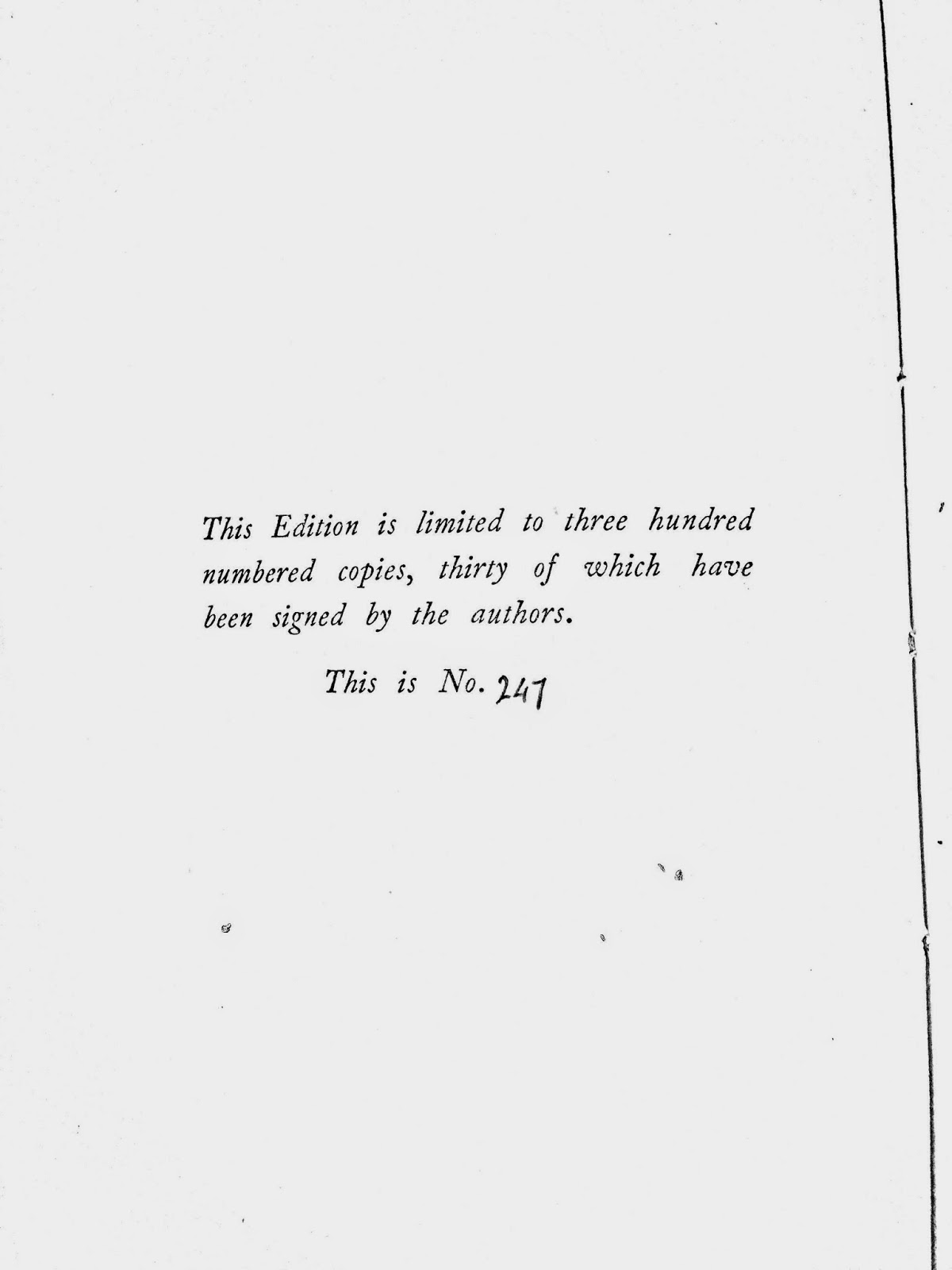
TWENTY POEMS by Niall Sheridan & Donagh MacDonagh (1934; 2015)

 No. 247 is reproduced and digitized here for scholarly purposes.
 Use images in accordance with the authors' 1934  lapsed copyright.


Friday, 16 January 2015

JANUARY POETRY

This is a sentence.
Lindsay O’Connell


your compliments arrive at a well-considered welcome moment and, though not decidedly deserved, are appreciated by me because writing, as you no doubt know and have tried to convince me so far, takes lots and lots and lots of practice, and so I encourage the unfortunate stroke to break rules and elide convention which you make (if only in your own mind) through humour, as well as the other means at your disposal: sincerity, save-face, pity, pouring drinks etc., along with your appeal to me here; but the vastness of this appreciation, my appreciation for your writing that is, which is ever-widening I assure you, reminds me that I, and almost certainly any other person who aims to practice (like breathing), never set down rules and only aim to suggest (often through example) the best way to approach cuneiform which will always be concerned with the picture, or the problem, or the person, or the task it traces; however, these reasons, while admittedly strong in counter-point, do not change the outcome of today’s meeting – an event that seemed to me to be more about the relaying or rules and stylistic necessity of texting than encouragement to keep on writing – move your pen, move your pen, shift-up, shift-up, it’s a call to write write write…

Sunday, 16 November 2014

NOVEMBER POETRY

Three Ways of Not Saying Something
André Narbonne

1. You're missing quite the river. It's working out its cricks -- stretching in the sun.
I walked by on my way home from downtown.
I thought something large was passing, but it was just the expansiveness of it all,
popping.
Anyway, that's what you're missing. I thought you should know that.

2. Here's what you're missing today:
The river is changed. I walked by it, laden with problems, on my way from the LCBO, and it was voiceless. Today is warmer but the sunlight is a vague patchwork that doesn't heat. It's not the same verb.
Yesterday when I pulled myself up from other things I expected to see a freighter and was surprised to find, instead, three white swans staring back at me. Imagine: three swans – the magic number of the trinity and other narrative functions. I felt cheated by the mythological implications. I felt like I wasn't viewing anything in particular, like discovering that the meal I was eating had been eaten before by so many other people it could no longer be said to have a flavour. That's what I thought, but, happily when I looked further I found two other swans. So five. I thought, that's good and irregular. When I looked for more I realized that the narrow bits of open water (imagine cracks in a window with some of the knife-like pieces missing) were overpopulated with birds, but they were darker than the swans and had to be understood differently, had to be made visible through some sleight of realization.
Today I didn't see a single bird. I didn't hear a gasp or a pop. No voice, no life. If you look near the shore you'll see the ice is piled up in flat sheets the scattered way discarded paper sometimes lies beside a printer when something difficult is due. It frames the centre of the river, which is mostly open. Yesterday's voice seems to have smashed a channel of broken knife blades.
But you'll see all that when you come back. Maybe you'll have birds. How strange they should be there on a day when the river was so loud.

3. The first time I saw the river
it was summer and a man was
selling French fries from a
truck and that was comedy and
the other trucks on the bridge
were gravitas and
the river was the sort of idiot
you can never master and
the clouds were steel
traps clamping a church
in their uninspired significance.
The day felt like a carnival of nothing.
How could it change?
It didn’t change.
The first time I saw the river I didn’t
know what I was looking at.

NOVEMBER POETRY

Our mother had the wrong kind of children
Ellie Hastings

Enough happened
to peel delicacy
from our palms
not yet wide enough
to have our fortune told.

On days we could not stand
tall enough
to reach up,
crossed fingers could not save us.
Cleanliness was holy
water. Cleanliness was sharing a bath.

But like children cement themselves
in sidewalks
and skinned knees are still
on driveways,
we’re buckled in.
Our own fortune happened
enough.

NOVEMBER POETRY

Quentin

By Christopher McCarthy

      •

There he is
on a bicycle.

Bad timing
up my nose.
Through walls

he and his
wife fought
long – hard.

Still, looks
shatter with
a grin / a firm
handshake.

She says she’ll
kill herself but
don’t believe it.
He’s Hughes of the 
Fox not fingernails.