Friday, 30 January 2015

JANUARY POETRY


[Waiting for Charlie]
Hannah Watts


Ph speaks to me about truth & essays.

He tells me to own the I


build Babel. But my tools are scattered

mouthful vital soils.

I exhume Plutarch with my tongue while 


we chat about identity over coffee.


He hunched in Leffler Peace Park, eyes dilated, children sipped from his lips.

I tried to imitate his gaze and my father called me—


Gréagóir pulls me to his chest, arms ignited

I burrow in embers


Manitoulin river rock sunset


he clings to me like Charlie, sinking rib-deep

breathless he takes shots shots shots

my fingertips graze smouldering shoulders.


Deathless, I ride single breasted into the breath of Achilles.

But I am thin. I hide behind trees, torchless on the edge of seas.

I pronounce my time of death 


and engagement 


I wave my hand to display the ring.


Poets are not liars because we never claim truth.

I feel old when I should feel brilliant. 


This is an intimate conversation.

Monday, 26 January 2015

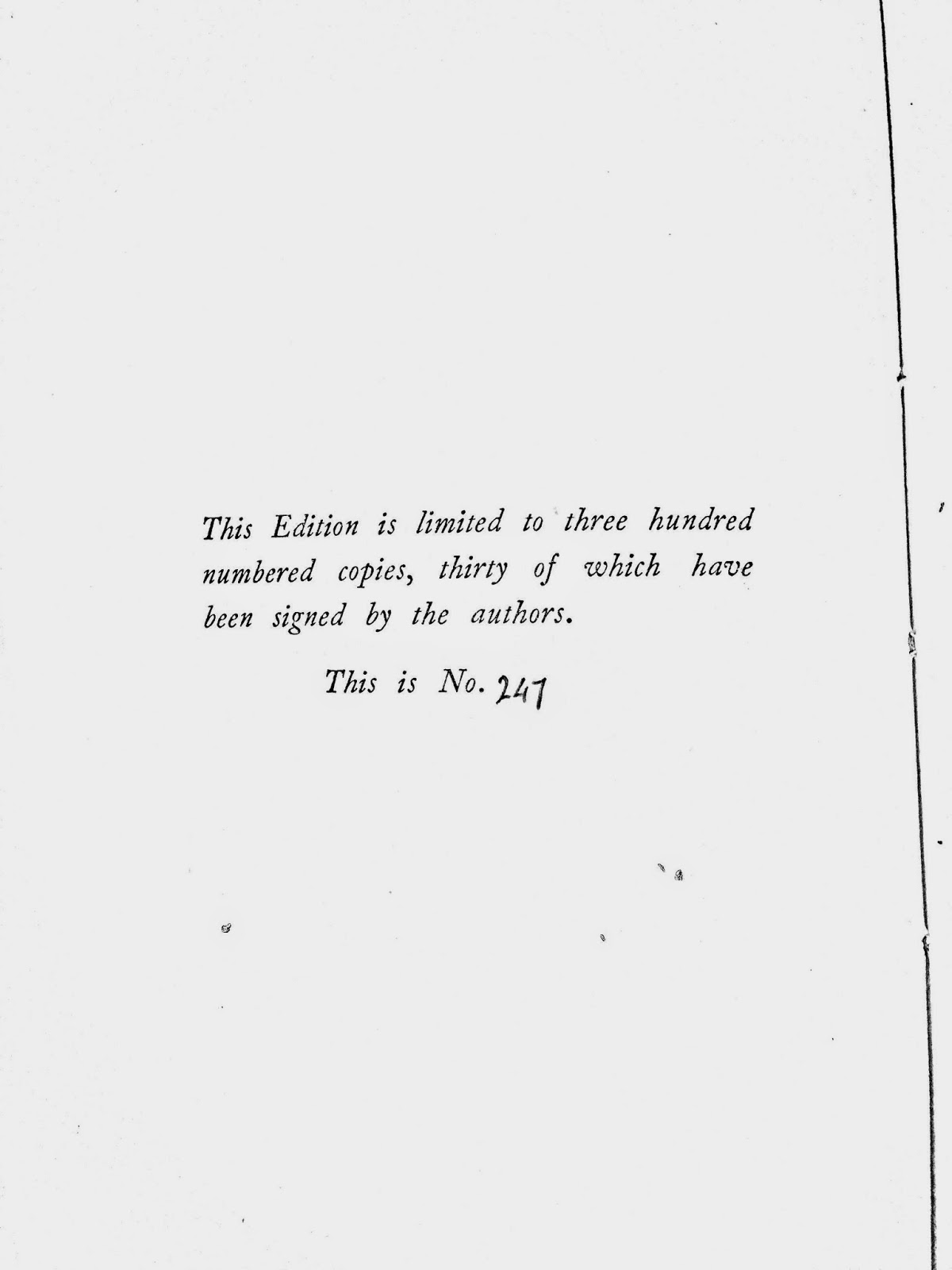
TWENTY POEMS by Niall Sheridan & Donagh MacDonagh (1934; 2015)

 No. 247 is reproduced and digitized here for scholarly purposes.
 Use images in accordance with the authors' 1934  lapsed copyright.


Friday, 16 January 2015

JANUARY POETRY

This is a sentence.
Lindsay O’Connell


your compliments arrive at a well-considered welcome moment and, though not decidedly deserved, are appreciated by me because writing, as you no doubt know and have tried to convince me so far, takes lots and lots and lots of practice, and so I encourage the unfortunate stroke to break rules and elide convention which you make (if only in your own mind) through humour, as well as the other means at your disposal: sincerity, save-face, pity, pouring drinks etc., along with your appeal to me here; but the vastness of this appreciation, my appreciation for your writing that is, which is ever-widening I assure you, reminds me that I, and almost certainly any other person who aims to practice (like breathing), never set down rules and only aim to suggest (often through example) the best way to approach cuneiform which will always be concerned with the picture, or the problem, or the person, or the task it traces; however, these reasons, while admittedly strong in counter-point, do not change the outcome of today’s meeting – an event that seemed to me to be more about the relaying or rules and stylistic necessity of texting than encouragement to keep on writing – move your pen, move your pen, shift-up, shift-up, it’s a call to write write write…

Sunday, 16 November 2014

NOVEMBER POETRY

Three Ways of Not Saying Something
André Narbonne

1. You're missing quite the river. It's working out its cricks -- stretching in the sun.
I walked by on my way home from downtown.
I thought something large was passing, but it was just the expansiveness of it all,
popping.
Anyway, that's what you're missing. I thought you should know that.

2. Here's what you're missing today:
The river is changed. I walked by it, laden with problems, on my way from the LCBO, and it was voiceless. Today is warmer but the sunlight is a vague patchwork that doesn't heat. It's not the same verb.
Yesterday when I pulled myself up from other things I expected to see a freighter and was surprised to find, instead, three white swans staring back at me. Imagine: three swans – the magic number of the trinity and other narrative functions. I felt cheated by the mythological implications. I felt like I wasn't viewing anything in particular, like discovering that the meal I was eating had been eaten before by so many other people it could no longer be said to have a flavour. That's what I thought, but, happily when I looked further I found two other swans. So five. I thought, that's good and irregular. When I looked for more I realized that the narrow bits of open water (imagine cracks in a window with some of the knife-like pieces missing) were overpopulated with birds, but they were darker than the swans and had to be understood differently, had to be made visible through some sleight of realization.
Today I didn't see a single bird. I didn't hear a gasp or a pop. No voice, no life. If you look near the shore you'll see the ice is piled up in flat sheets the scattered way discarded paper sometimes lies beside a printer when something difficult is due. It frames the centre of the river, which is mostly open. Yesterday's voice seems to have smashed a channel of broken knife blades.
But you'll see all that when you come back. Maybe you'll have birds. How strange they should be there on a day when the river was so loud.

3. The first time I saw the river
it was summer and a man was
selling French fries from a
truck and that was comedy and
the other trucks on the bridge
were gravitas and
the river was the sort of idiot
you can never master and
the clouds were steel
traps clamping a church
in their uninspired significance.
The day felt like a carnival of nothing.
How could it change?
It didn’t change.
The first time I saw the river I didn’t
know what I was looking at.

NOVEMBER POETRY

Our mother had the wrong kind of children
Ellie Hastings

Enough happened
to peel delicacy
from our palms
not yet wide enough
to have our fortune told.

On days we could not stand
tall enough
to reach up,
crossed fingers could not save us.
Cleanliness was holy
water. Cleanliness was sharing a bath.

But like children cement themselves
in sidewalks
and skinned knees are still
on driveways,
we’re buckled in.
Our own fortune happened
enough.

NOVEMBER POETRY

Quentin

By Christopher McCarthy

      •

There he is
on a bicycle.

Bad timing
up my nose.
Through walls

he and his
wife fought
long – hard.

Still, looks
shatter with
a grin / a firm
handshake.

She says she’ll
kill herself but
don’t believe it.
He’s Hughes of the 
Fox not fingernails.

Tuesday, 3 June 2014

"scaling letters" an a/g review

scaling letters: rob mclennan and How the alphabet was made
by Aaron Daigle

            rob mclennan's How the alphabet was made, subtitled [an instructional]. What this 2014 chapbook instructs might be the characterization of the alphabet. Getting ahold of slippery letters seems a recent poetic preoccupation in Canada: Christian Bok's eunoia formally constricted himself to one vowel in each word, rob suggests a concept behind each letter and uses that as the limitation.
            The chapbook is unassuming in appearance, but the cover hints at the project. The first fifteen letters of the alphabet are bubbled with a corresponding hieroglyphic, alluding to a time where letters were not abstracted from concepts. Though there are fifteen poems in the book, they do not correspond to the letters on the cover.

            "A" is "shocked, an appetite." We say "a" when surprised or opening mouths.
            "B" is "bewitching," sexual.
            "C" is musical, "Below middle" C, and describes how music blurs distinctions, "conflate"s.
            "F#" is "A failing, flustered," struggling.
            "G-d" is spiritual.
            "Hh" is "connecting, land-bridge."
            "M" is "miracles."
            "N/A."
            "O" is "A flower, two              out       of this grief."
            "Ph" is a doctor, "Chemicals and the subsequent mouth."
            "r" is for regret.
            "U" is displaced, "Snowfall: we need less / a person,"
            "V" is "The basic mysteries               adrift, / a shrapnel feeling."
            "xxx," is the "basic mystery" of sex: "Such Hubble shapes   in crinoline; vernacular / ethics, tiny / bubbles, baubles. Take it / all off." Where "Outside: / is very, very bright."
            "Zed" is Canadian, "The Story of a mailman, shallow     bed of bone / and whispers."
           
            Some stylisms cohere the chapbook. mclennan uses commas and semicolons to disrupt full sentences. As he isolates the character of each letter, he suggests a unifying link to this letter may be found in disparate words, something that resists linear narrative: "Sidebar, notion; plants and seeds and trees from earth, a suspect, carnage; a suspect vehicle, / what you would wonder: we / were not an end. / Pegasus, thy lusty Minotaur; some alphabets believe" ("A"). These italics provide a second level of text, the equivalent of theatrical asides and parentheses.
            The poetry leaves gaps in syntax just as much as the page, space for the imagination to fill. "An impure whiteness, shark" ("Ph"). By arresting normal conventions of thought with a firm grounding in the senses, the body responds to these poems on an intuitive level, shaking a reader from complacency. Not least of which when the reader themselves is urged to "Name, me out of mourning, back into display. Top of the stairs" ("r").
            Most effectively, mclennan's keen observation eye leads him to startling assertions about the nature of reality. These types of sentences disrupt logical sequences while concisely starting a powerful metaphor. For example, "This wooded moment, perished like an owl" and "Horizon frames us, just as much / the television; composed of fragments; throttled-ground, // a quell between the bones" ("Hh"), "We, who are wondrously large / present no difficulty to an empty room" ("A"), and "What the dog knows." ("V"). Much of mclennan's poetry juxtaposes the large and the sall, the individual and the environment. The value of a strong metaphor or image cannot be understated.
            mclennan suggests that our conceptions of language are constantly shaped and infused by what we perceive. It's easier to sense and feel the presence of a letter when a title points to it. By virtue of being connected in that poem, the poet asks the letter's function: what is particularly "B" about "Bestial everywhere, a blade               of synapse, / blazing; we                   ride a long time on the subway." By simply titling each poem after a particular letter, instances of that letter on the page are bolded in the imagination.

            I hope mclennan expands or revisits this project. Nine letters remain to be told of the alphabet. There weren't any major criticisms I had of the chapbook. I'm divided on mclennan's habit of beginning a line with a comma – it maintains the aesthetic ambiguity of ending a line without punctuation while clarifying the grammar in the sentence. Beyond that, "These eyes, yes, a thousand" ("G-d") thoroughly enjoyed the chapbook. How the alphabet was made? Perhaps through a mind to observe, concepts to describe, and a world to realize.